"Dyno tuning" gets thrown around like it only matters for race bikes. It doesn't. A dyno tune is one of the highest-value things you can do for almost any modern Harley, and most of the benefit has nothing to do with bragging-rights horsepower.
Here's what it actually does.
What a dyno is
A dyno is a machine that loads the rear wheel and measures exactly what your engine produces, horsepower and torque, across the entire RPM range. More importantly, it lets us read the air-fuel ratio at every point in that range while the engine is under real load. We're not guessing how the bike is running. We're watching it run, in numbers, in real time.
Why the stock tune leaves money on the table
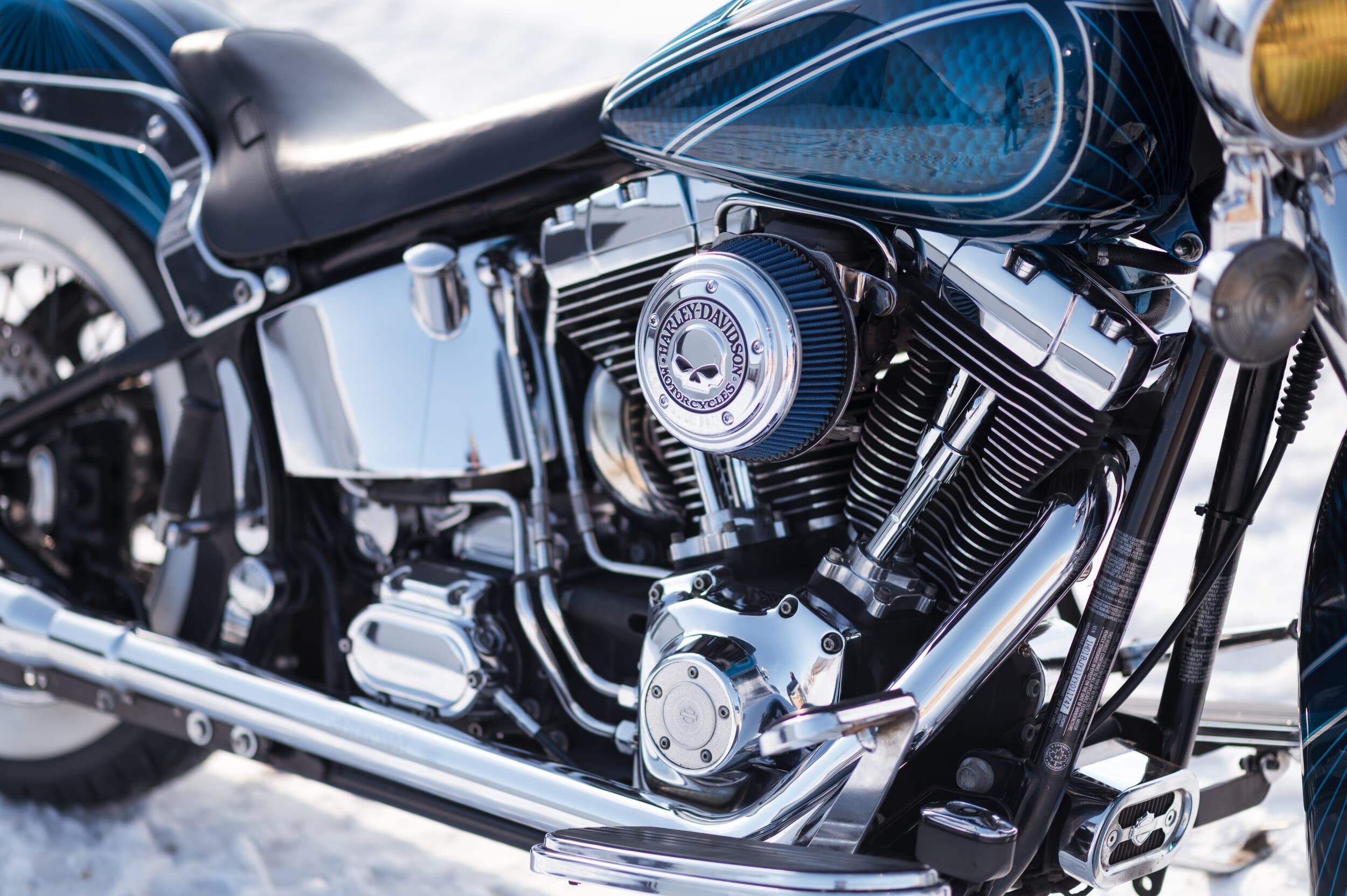
Factory and "canned" download tunes are built for an average bike meeting emissions targets, not for your bike with your exhaust, your intake, and the air in this part of Ontario. The result is often a Harley that runs lean in places, which means more heat, a flat spot or surge here and there, and worse fuel economy than it should have.
The moment you add a slip-on, a high-flow air cleaner, or a cam, the stock fuel map is no longer correct. The hardware can flow more air, but the computer doesn't know it yet. That's the gap a real tune closes.
Our process, start to finish
Every performance job that leaves the shop gets the same treatment:
- Baseline pull. We run the bike as it sits and record the numbers so you can see exactly what changed.
- Read the fueling. We map the air-fuel ratio across the whole RPM range and find where it's lean, rich, or hesitating.
- Custom ECM map. We dial in the fuelling and timing for your specific combination, not a one-size download.
- Verification pull. We run it again to prove the change and confirm the bike is safe across the band.
- Printed dyno sheet. You leave with the actual chart. We measure what we change.
Who's on the dyno
Tuning is its own craft. Brad runs our dyno work as a Dynojet tuner trained under renowned tuner Russ Fuller, and he's Harley-Davidson dealership trained on top of it. Reading a torque curve and knowing what to do about it is the difference between a bike that runs and a bike that rips.
Signs your Harley wants a tune
- You've added an exhaust, intake, or cam and never had it tuned
- The engine runs hotter than you'd like in traffic
- There's a flat spot, surge, or decel popping
- Fuel economy dropped off
If any of that sounds familiar, a dyno day will likely pay for itself in how the bike feels and how long it lasts.
Ready to see real numbers from your Harley? Book a dyno session with DG Custom Cycle in Aylmer.